Showing posts with label el paso. Show all posts

Thursday, July 04, 2019

Bus rides 🚌 to Pershing Drive, shots 💉, and arroz con frijoles 🌯, with a bowl of hot, red Jello water 🥣

Note: A member of the Facebook El Paso Memories group posted a picture of the now privately-held Pershing Theatre, and that opened a time and space portal for me.
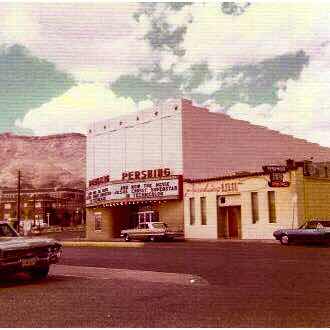


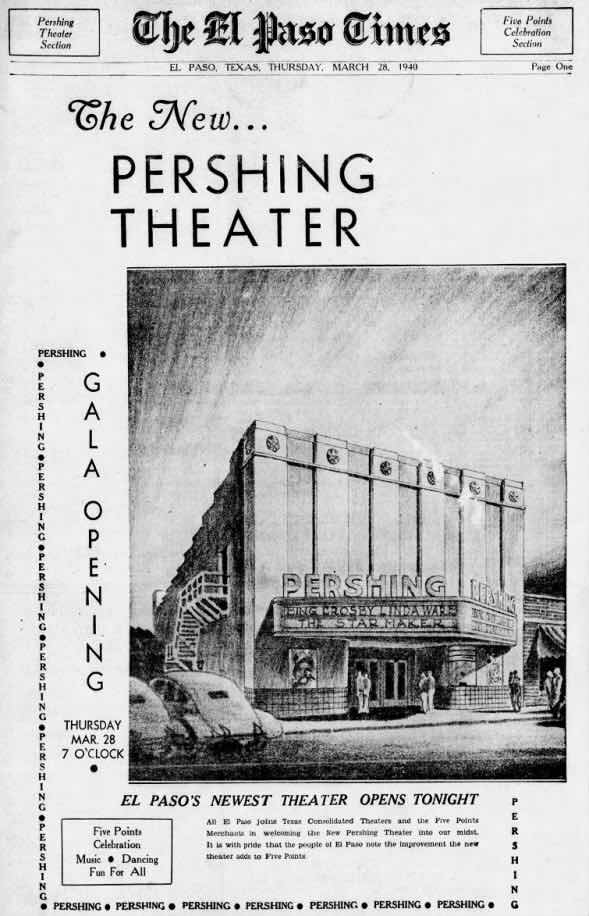
All first run Disney movies were shown at the Pershing Theatre, and for the most part, “family-friendly.” My mother never learned to drive even though abuelo told her to get dad to teach her before they wed. “You won’t learn after the wedding,” he warned. She never did, so she and I took the bus. 

Before the various El Paso bus companies consolidated, my mom and I traveled El Paso on several bus lines. We took the blue Lower Valley bus from our house on Taxco in Ranchland Village. Next, we’d  transfer to the Government Hill green city line, and then walk to the one-screen Pershing after disembarking at what is now the El Paso Police Department headquarters (was Sears). Between Sears and EPPD the building was purchased by the Diocese of El Paso with the intention of moving Christian Brothers’ Cathedral High School into it after being retrofitted for educational and PE purposes. That would have been a neat trick as its current location sports a swimming pool. But the dream never materialized. 

Chisme sidebar: It was said the Vatican approved the loan for the building, and immediately the paper was stowed in the “never to be repaid file drawer” by the lending bank. 

But back to when it was Sears at Five Points.

Before we moved to Santa Fe, my first experience with and for a great team, supervisor, and comptroller was working the sales audit control desk. It was a routine if fast-paced situation within the accounting department. We were squirreled away in office space on the second floor. Happily, the  job opened many doors for me insofar as work experiences and future expectations went. 

The Montana Street at Piedras site is an unusual one in that, the Ralston Masonic Hospital (Lodge #130) also stood there from 1910 through WWII. From healthcare, to retail commerce, to pipedream of an reinvisioned educational facility, and now housing a local law enforcement agency — much has occurred over time on one single trapezoidal spit of land. Whatever came before Ralston Masonic Hospital?

The Ralston had a children’s ward that treated those with juvenile arthritis, polio, and Legg-Calve-Perthes, a disease that hobbled my dad at 14, and causing him to limp for the remainder of his life; sadly dad died in 2015, aged 89. Dad spent most of a year in the Ralston, learning to walk again after surgeons at Southwestern General operated on his hip to remove the diseased tissue. Over time, his hip joint fused because of the initial surgery and post-op care. According to the daughter-in-law of one of the orthopedic doctors who treated my dad, the Ralston Masonic Hospital brought El Paso its first orthopedic specialists, specifically for pediatric care.
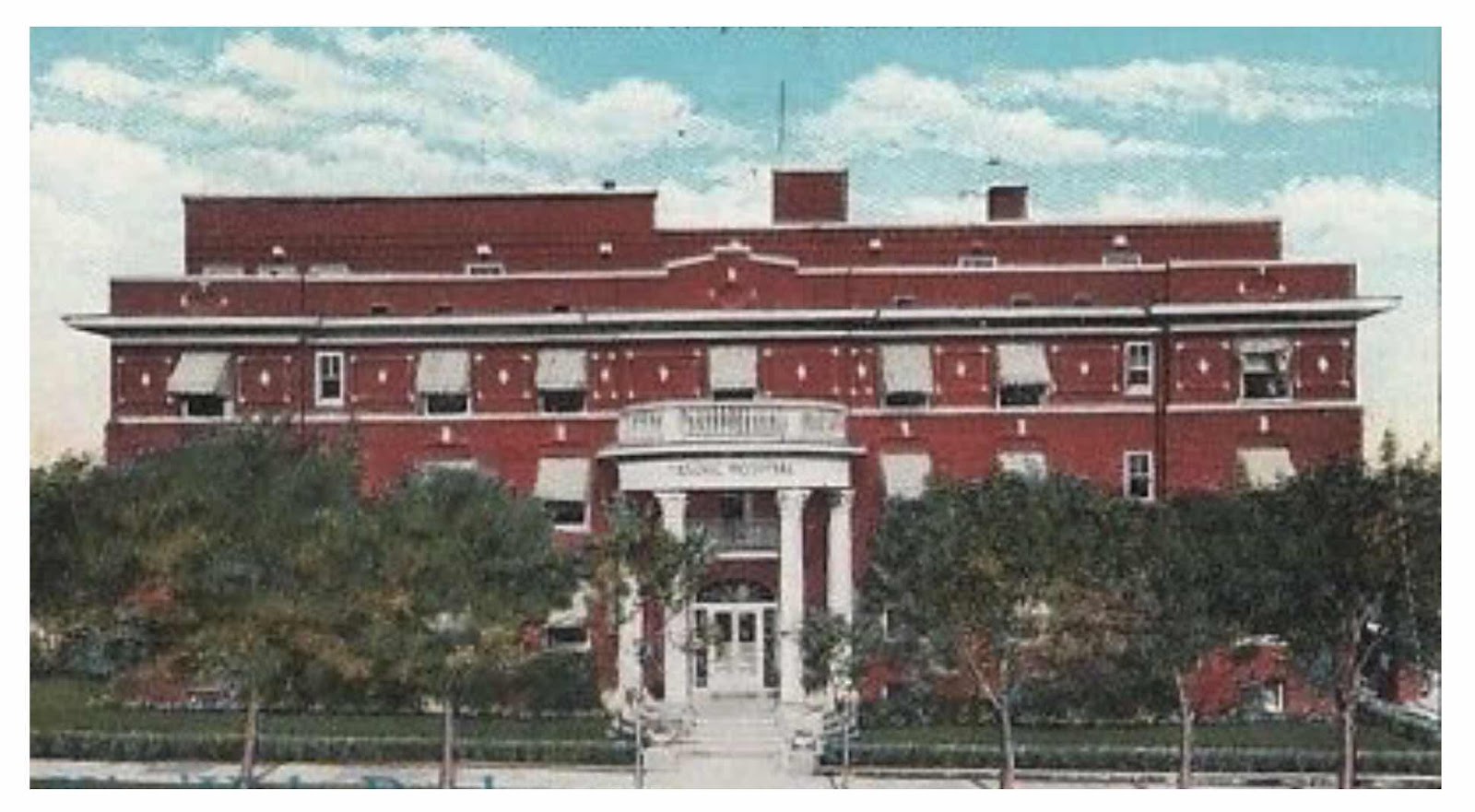
Masonic Hospital, Five Points, El Paso

A block away on Pershing Drive and many years from his experience, I walked out of the theater with my mother after seeing “101 Dalmations” (1961) or maybe it was a holiday rerelease of “Lady and the Tramp” (1955). 

Clearing after an intense thunderstorm, dusk was turning to twilight and would soon be nightfall as clouds broke, revealing the sky’s first stars. We waited under the marquee for my father to pick us up in his 1956 Olsmobile Delta 88. It was turquoise and white. 

Sidebar parental advice gone unheeded: Though she tried after she turned 55 to get her license and then drive alone, mom never got past earning her learner’s permit. Dad had no hand in that accomplishment as she paid for the driving lessons herself. I return you now to the next part of the story.

Next to the theatre is the Pershing Inn, and next door to that was the office of our family doctor, Dr. Joseph S. Galatzan, brother to Judge Morris A. Galatzan  It was within that small rectangle of central El Paso real estate that my mother and I traveled the bus system so often. Far too often, it seemed. Especially regarding my allergies.

My dad’s family had met the Galatzans because they lived in the same neighborhood near El Paso High School (EPHS) 🐅. My grandmother Ruby and the brothers’ mother were best of friends. Their backyards were adjacent to the duplex, my grandparents first home on Virginia Street, just below Schuster Drive, after they moved from Oklahoma. They originally came from Little Rock, Arkansas. It was their good fortune to get to El Paso right before October 31, 1929. During his medical career, Dr. Joe Galatzan was team doctor for the 1966 TWC Miner basketball team and instrumental in establishing Sun Towers Hospital (now Las Palmas). 

The quintessential family doctor, he delivered my older sister who but lived one day, and me, born two years later; he removed my tonsils at Southwestern General Hospital; and later, confirmed my first pregnancy. Overall, I spent much time in his office as I had a running sore throat accompanied by horrible earaches due to airborne allergies. It was never strep, though I still can recall the pain in my ears and my mother needing to warm up drops she applied nightly. Bermuda grass and non-bearing mulberry trees — hybridized and frustrated fauna — they cost many school-aged kids  to lose classeoom time, and have goopy morning eyelids, receive painful innoculations, and experience popping eardrums.

Dr. Joe had Highlights for Children in his office and I would read them always from cover-to-cover as I waited for the inevitable SHOT. I camped out in that office so often because I needed what seemed like monthly antibiotic shots in my butt to combat those chronic allergy-related infections I got ad nauseam. Not only shots, I constantly was instructed to gargle with warm water and salt, as directed by my mom. I must admit it did help, though she made me hot Jello water to sooth my throat, too. Red please. 

2911 Pershing Drive today.  Previously the office of Dr. Joe Galatzan. (Source: Google maps)
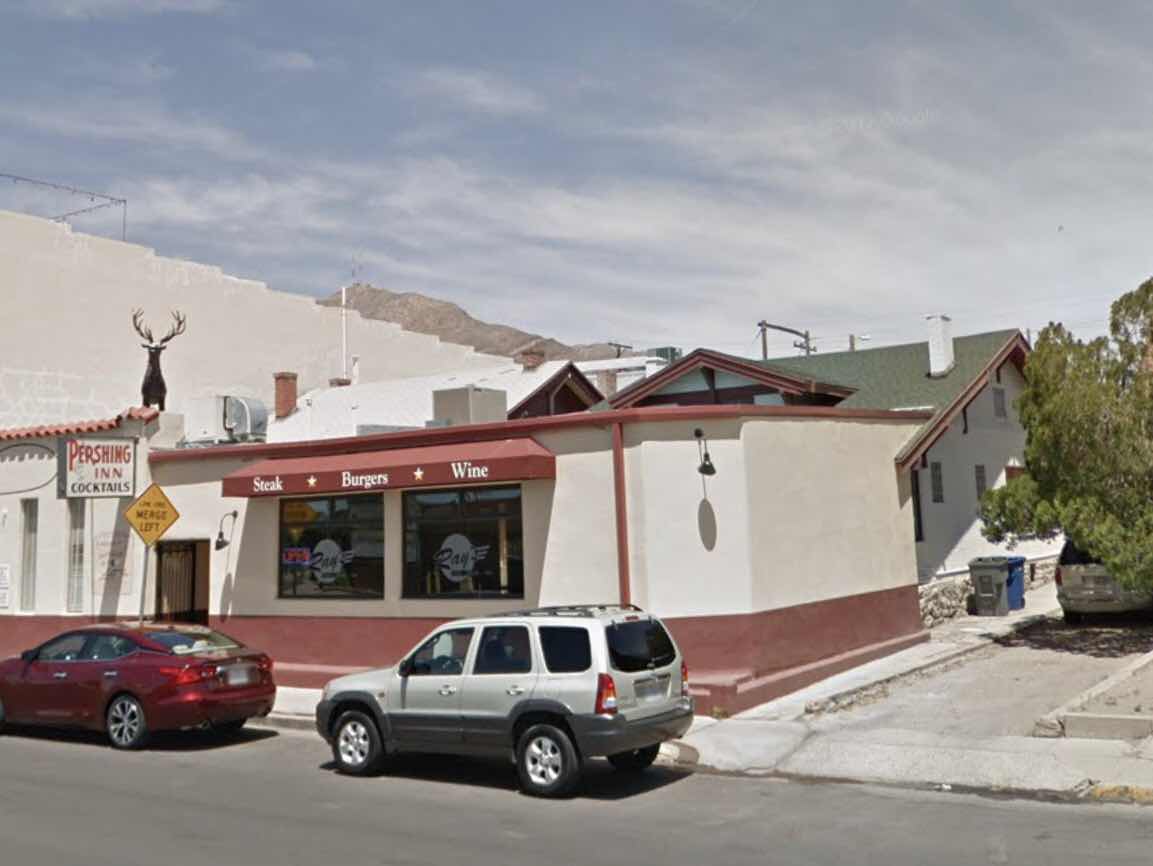
The doctor officed in what had been a traditional Austin Terrace/Five Points bungalow. The telephone system had a peculiar ring to it, something completely different from the usual house trill. The sound of the office phone added to the  atmosphere of dread — from the Hightlights Timbertoes family, their black and white line drawings having way too much fun, to the dim filtered light made by wide venetian blinds, and dark bricked fireplace — it was quite a dreary vignette. Once inside and through to the exam rooms, however, the light shifted immediately to bright white lights, white enameled cabinets, and the efficient- and sanitary-looking healthcare whites worn by nurse Blackie and Dr. Joe. 

Blackie was a formidable woman. She took no shit from anyone, even whiny me. She wore the quintessential stiff white uniform with cap, and thick rubber soled white nurse shoes that squeaked when she walked on the green speckled lino flooring.

After she would call me back, I was examined, and Dr. Joe would then pronounce his diagnosis. It never varied: a shot and pills in my butt and down my throat, salt and water gargle for my swollen tonsils, and ear drops and cotton balls for my popping ears. Sometimes an eyewash for summer mornings when my eyes were glued shut overnight by an obnoxious green discharge. The shot. Another shot. Always a shot. Terrified of the things, I once clenched my butt so tight I literally shot the innoculation back at Blackie. Man, she was angry. Maybe that’s when they decided I should have my tonsils removed. Nurses at Providence later told me that Blackie ended her days there, and to her dying day gave them all bloody hell. 

Sidebar childrearing: Swats on the butt after a shot hurt more than regular ones. 

After the ordeal, my mom and I would then get back on the bus and travel to either downtown to visit my dad at work, or we would get off at San Jaconto Plaza (terminal point for the green city bus line). Next, we’d walk to near the main library and catch the sky blue Country Club bus and travel on to Smeltertown where my abuelos and cousins lived. Finally, a glass of iced Kool-aid or tea, and a quick lunch of frijoles, warm tortillas made by my abula and tia that morning with Mexican rice. Then a nap. Afterwards I’d have time outside with my cousins after they came home from Jones school. It happened all beneath and across the road from the ASARCO plant. Land of hot sand and sulphured skies, the Rio Grande was about 100 yards or so from La Esmelda backyards.  La Esmelda, with her hand-built adobe and cinderblock homes, chicken coops, and caged yellow canaries, hanging from my abuela’s cottonwood tree..

Good times.


Here’s a good blog post about the theatre and its owners:

Friday, August 17, 2018

Foto Frontera at the La Fe Cultural and Technology Center


Exhibition Link on Wix

If you are in town from Thursday, September 6 to October 26, 2018, please stop in to see all the wonderful photographers' works which will be on display along with my dad's images.

For the event, I chose to create a new website for my dad's images using Wix. Every semester, I teach a First Year Composition course that includes an ePortfolio or Advocacy Website assignment. This allows me to remain relatively current with the various free services students can use to create their websites. Because of this practice, I decided to create a photography exhibition / portfolio for my dad's photographs that will be exhibited in September at the La Fe Cultural and Technology Center.

I like the idea of being able to connect from one service to another while adding content here, and chose Wix because it lets the designer create finely arranged pages, and provides several basic templates from which to choose. Weebly is very good too and I've created sites with it. It is very good for students that have little or no web design and authoring experience. However, Wix seems best for portfolio and gallery type sites. 

Friday, April 20, 2018

The quiet ones with whom we share the land: Mule deer and skunks

Accompanying an announcement reminding students a draft was due soon, this image was included with a note about the deer that live nearby. Added here is a collage of one of several skunks who live around the arroyo, too.
mule deer

One of six mule deer that live in and around the Franklin Mountain foothills in an arroyo behind my house. This fellow and the others usually walk up and down the arroyo, munching on leaves that hang over the walls.

Deer usually travel together in groups of threes, although all six have been seen together as far as Snowheights and Westwind. Last week, I spied two females with their juvenile offspring, one each.

A couple of seasons ago, the six, seen earlier down Westwind one evening, were seen later that night walking back into our arroyo (a rain runoff collecting station for the area) behind my house.
collage of American skunk, male
Silently and slowly they walk along the backyard walls that face the arroyo below La Posta. They are nearly invisible unless you see them move. One side glance and they disappear again until you detect their movement. This place was christened Foxes Arroyo as two foxes have lived in the arroyo, too. One night I heard their growly noises at our old cat Buddy, and I saw their ears and faces peeking over the back rock wall. Another night we saw them scamper across Belvidere to get back into the arroyo. Like the deer, they forage beneath the larger house walls across and in the arroyo. Instead of greens they search for small rodents and other small mammals. 

Quietly, too are the skunks and other smaller mammals that dwell in the foothills of the Franklin Mountains. In the winter, a momma skunk and her kits will sometimes keep warm in our garage. We leave its door open about three inches so that animals can get water. If we left out dry cat food, the skunks come in for a nosh, too. But the night I captured this small skunk it was about 10:30 PM. They also make the rounds about 2:00 AM. Here, he is munching some seeds I put out for them. In the morning, all the birds will alight and finish what was there. The bird seed includes sunflower seeds, dried fruit, and nuts.

Along with the skunks, we have Steller's blue jays (migrating), two types of dove, mocking birds, juncos, tiny ladder-back woodpeckers, thrashers, minuscule field mice, ground squirrels, coyotes, owls, raptors, (red tailed hawks and the petite American kestrel) and squirrels. Years ago, a friend in Northeast El Paso said he saw a badgers in his neighborhoods near the Franklin foothills off Magnetic. Deer and skunks are also living there, too.


Monday, April 16, 2018

Sidebar: Concrete, Cotton Seeds, and Cigarettes

Recently, I've been sharing what I call Sidebars, random information about local items of interest. I send the information along when I send announcements Asarco smokestack under construction, El Paso, late 1960s.to students via Blackboard. This was the most recent Sidebar, but now I'm thinking I will go back and post more of those here, too.

Image above: In the mid-1960s, after my father worked for The Popular department store for many years, he left to work for a testing laboratory. There, he tested cement, and ran soil compaction tests for many large projects in town, including the now demolished Farah Manufacturing facility (now the site of the Fountains of Farah), Morehead Middle School (concrete corrugated shaped flat roof), the El Paso International airport traffic controller tower, and the tallest ASARCO smokestack, completed in the late 1960s. At ASARCO, dad photographed the construction site at ground level several times and he was even allowed to take me there, too. Between the ages of 7–12, I went to many sites and watched the concrete compaction tests at the lab and helped place cement cylinders in the damp room where they were to be cured for 21-days. The cylinders were capped at the building site with a funky yellow sulphur cap at either end. 
For its time, the ASARCO smokestack project was the largest and longest continuously poured cement project in the world. When the regionally grown cotton was ready to be processed into cotton-seed oil, dad worked at the Southwestern Irrigated Cotton Growers Association* (SWIG) processing plant. When he came home after working at SWIG all day in the fall, his short-sleeved cotton shirts were permeated with the smell of refined cotton seed oil. 
One Sunday, while visiting my grandparents at their home in Smeltertown, which stood directly across the street from the ASARCO plant, dad got a call to go to the construction site. I begged to go with him and he said yes. We toured the ASARCO site with the project manager and walked inside the tower as seen here. I remember looking up to see the blue sky while standing dead center within the hollow stack. (Shades of The Ring!) Later, when it was complete, dad rode the construction elevator to the top of the smelter tower and shot photos from its platform. Unfortunately, those photographs were given to ASARCO and I never saw them. 
By the time the tower was demolished on April 13, 2013, my mom had died in January of that year, and dad had lost most of his sight due to macular degeneration**.

**Macular degeneration is hereditary. However, those who get it in later life were usually those who smoked cigarettes. My father smoked unfiltered Chesterfields from the age of 15 to 58 or so. Not long after he quit he began losing his eyesight. 

Friday, July 28, 2017

Not all who wander are lost: The Value of Genealogy

Ethnography meets Autoethnography
Met two women for coffee this morning. Having traveled from diverse parts of California, and here to conduct genealogical research, they are part of an old El Paso family. They will visit the main public library downtown, UTEP special collections, and their family's graves at Mt Sinai Cemetery, which is adjacent to Concordia. I believe it is the only cemetery I've not visited or captured headstone images. So, I've posted a couple of images from my local cemetery flickr album. 
Concordia and the L&J
Percy Frank Thomas, Concordia Cemetery
and the L&J Cafe in the background.
Before my dad died, I researched their family as dad had been a childhood friend of their relative, the youngest son of a large and vibrant family. To help answer my dad's questions, I created a public Ancestry tree containing his friend's parents, siblings aunts and uncles data, then triangulated information using newspapers dot com, city directories, and US census data. It is the only public tree i have let loose. I did this for dad (and me, too) because of dad's funny stories about their brief friendship and how he wondered what had happened to his younger friend. I think they were about 2-3 years apart in age. Dad always marveled at how smart his friend was. Evidently, he had skipped two grades, and I found he attended University of Colorado and majored in engineering. I found pages of his college yearbook and learned what fraternity he joined. Eventually, Dad's friend worked as a satellite engineer in Arizona, and was a university professor. Newspapers dot com helped me view and save newspaper articles about his projects.
After dad and his friend moved apart from their houses on North Florence near El Paso High School, his friend's father died, and this part becomes more interesting from a feminist standpoint. Although the family was involved in retailing, his mother became an immigration counselor for people seeking asylum here before the US entered WWII. She set up an immigration information center on Olive street where a housing development now stands.

It is interesting because the family originally fled the pogroms in eastern Europe and somehow landed here by way of Mexico, as have many other families who settled here. 
I found articles in the El Paso Herald-Post about his mother, who spoke to women's groups about her work and how those seeking asylum were needing assistance.
She was very instrumental in helping people enter the states because of Hitler's rise.

As the children grew, his sisters remained here, became teachers, and his brothers served in the military. And now, they are almost all gone from El Paso. It is amazing to me how many different souls from various parts of the world have passed this way, stayed a while, and then moved to other parts of this country.
"Immigrants, we get the job done."

Wednesday, March 22, 2017

Campus: Cotton Memorial and Old Main by T.A.Jackson

The black and white image below was captured at the former Texas Western College of Mines campus (now University of Texas El Paso) with a medium format Kodak Medallist. The other digital images shown here were taken with an Apple iPhone.

Standing in front of Hudspeth Memorial building (was a dorm and now houses English) with Cotton Memorial on the left and Old Main in center rear, dad's image reminds of what a radical change this is compared with today's center of campus, especially since the Centennial Plaza project is complete. What a change!  
Compared with his image from the mid-40s, the grade in front of Cotton now runs several feet below the entrance to Cotton (which now has several sets of steps), and the Union has not been built in addition to the Main Library and the Liberal Arts buildings. Usually, such images can be dated by vehicles, so I'm going to ask my resident authority what year the cars are in this picture. I'm guessing my dad took this picture before his trip to the Western National Parks (pre 1950).
Today, the campus has a wonderful greenscape with water features now encompassing an area previously taken up by the Geology Building (was main library), and an older knoll that fell away from the entrance to the Union Theatre. That knoll is now a confabulation of boulders tumbling down to the green pitch. A knoll where I once sat upon its green, played my guitar, and sang the songs of Joni Mitchell.


My father went on in-town photographic journeys with a friend named Mr. Miller. Miller worked at the El Paso Herald Post and was a bit older than dad. After Mr. Miller died, I accompanied dad to visit his widow, so dad could help her value her husband's photographic equipment collection. The Millers lived in a big house on North Loop, near Farmer's Dairies, and they had two dalmatian dogs. I think I was 7 or 8 at the time. 

Today, I have dad's two Medallist cameras, which unfortunately use Kodak's proprietary 620 film and not the more readily available 120. He also left a nice Leica R4, which he traded for using a Leica M2. Towards the end of his life, we both agreed it would have been better to have held onto the M2. But, no matter. All are beautiful pieces of the mechanical reproductive arts. 

Before my father passed away, I gave him the Medallist to hold and examine. The medium format camera is heavy and I cannot imagine hauling it around today. 

At right, dad is carries his Medallist and Leica at Fort Bliss National Cemetery to visit the grave of his brother, Clinton Wesley Jackson (1927-2006). At the time dad was 80, and later died in February 2015.

Saturday, February 25, 2017

Deer have been coming down the foothills

And I hope they don't need to go as far as the river.

With Paisano in construction mode, I've not driven on it in a while. However, during an NPR news-brief today, I heard that El Paso's border fence segment is one of the first locations to be "modified, "added to," or "changed." I shudder to use the words, "improved," "strengthened," or "walled."
Railroad Bridge at Executive and Paisano near El Rio Bravo

Why begin such work here?  It is always the "vast" areas along the Arizona border and the unfenced lands towards Big Bend that people feel the need to "demand" a wall or fence instead of consistent patrolling as is done here. All this is quite idiotic to me and know that will harm native animals more than any other creature.

How is it possible that people having nothing to do with these lands see fit to grab hard working, vulnerable people, along with our tax dollars stolen from healthcare, education, environmental protection, and alternative fuel research to build such an ugly and sad wall/fence? Slicing families apart while claiming "their" immigrant elders came here "legally" when in fact there was no legal or illegality in that quotient of the time. Only specific groups were allowed to enter at certain times. Immigrants hustled themselves into a ship and prayed they would be allowed into this country. Hoped they could stay healthy enough to pass inspection. At least that was how my great gran Jacksons did it during the pre-Revolutionary era Massachusetts from Yorkshire via White Chapel, just as likely for the same reasons my Gonzales/Gonzalez great grans who came here from Aquascalientes, Mexico in the 1880s for ASARCO—for work, for industry, for capitalism, for a better life.

Such a waste of stale air emanating from this spawn of immigrants, spewing infuriatingly and nasally xenophobic speeches. This kleptocrat. This con. This racist. This man who brags he would sexually assault women who pass his orange muster. His karma wall is mounting high, and i hope it falls on him soon.

O hurry. Set a course now to impeach this narcissistic thief of vulnerable lands, frightened people, and ecological fragility.

Saturday, August 06, 2016

Cryptoquotes, matchbook covers, and where the puzzles went: A remembrance on the occasion of their son's birthday

In the garage on his workbench, Lucille stacked his to-dos. There were the crossword puzzles and cryptoquotes she saved for Stanley while he recovered from joint or pacemaker replacements. The saving stopped the morning after he went by ambulance to Sierra. He suffered a cerebral hemorrhage while his aide dressed and attended to his feet.

He loved a well-ordered garage and puzzles of all kinds. Lucille secured Family Circle and Better Homes and Gardens magazines tied with twine into neat bundles. The inside of the pantry door held neat paper bags saved from the commissary. The magazines were worthy of safekeeping because they contained interesting knitting patterns and recipes. Each side to the marriage reflected a life of service, whether to family, church, or country in an orderly way. His was of service in the Army, at work in telemetry at WSMR, and at the VFW hall having beers with his sons. He taught them how to care for the home and vehicles. He propagated geraniums for school fundraisers, and stood guard with fellow Knights of Columbus for the departed faithful (also known as the
"Knights of Columbo" by one particular granddaughter). Lucille’s service was keeping the home, sewing prom dresses, presiding as deanery president, baking for church and school fundraising bazaars, and crocheting and knitting afghans and sweaters that we all still use and wear. The warmth of Lucille's skills remains scattered across the Pacific to Hawaii, up north to Minnesota and Colorado, across the country to Brooklyn, with many remaining here in El Paso.

Next to the workbench on Skyline in Northeast El Paso, a funky pine nightstand once stood. The small chest had three deep drawers. One drawer held a plastic bag of matchbooks, acrylic 3-D puzzles popular during the 70s, a Rubric’s Cube™, and a small green cover with "Bridge"  embossed in gold script to hold score pads. The matchbooks were the kind restaurants and bars once given freely to customers. Another drawer held cassette tapes of Big Band music Stanley had recorded. He played the tapes on a small cassette player kept on top of the bench. Part of a bedroom set used by more than one child, the nightstand now sits, stripped of lavender paint, and next to a small teak desk in our bedroom. We kept one puzzle we liked best along with the often-solved Rubric's Cube™, and the matchbook collection. A favorite matchbook is from The Iron Tender where VED once worked. It was well-known for its steak soup. Before the steakhouse closed, a family friend appealed to the newspaper to reprint its recipe and that clipping how holds a place of honor on the kitchen bulletin board.

Recycled newspaper rubber bands help keep the clear acrylic puzzles fixed and complete until they dried out and failed. Elastic rubber band pieces collected at bottom of the drawer—short, pale green worms. Miraculously, the puzzles continued to remain solved and refused to fall apart in solidarity for the five years between their deaths. In one case, however, masking tape continues holding our favorite puzzle together—a diabolical apple. Except for the transparent fruit, all the puzzles went to the originally named Crisis Nursery for its thrift shop.

Founded by Mary Russell around 1977, I recall her first appeal for support. Since it was after Fr. Vonder Haar's sermon, it must have happened anytime excepting summer. That priest never could give sermons as he feigned an aversion to the heat for the parishioners. But we knew better—he being from a wealthy Philadelphia St. Louis family. He kept a large number of parakeets in the parish front office, and co-officiated my parent’s wedding at Cristo Rey in Smeltertown. He instructed, baptized, and confirmed my father.

But on that cool Sunday, morning after his sermon, Mrs. Russell began her appeal by explaining that there was a need in the community for a nursery. The need was both great and personal for her—a grandchild was blinded in one eye due to child abuse. She explained that a child crisis nursery acts as a go between for emergency after hours care, how the children and infants would be found and accepted into temporary care. She next asked for both monetary and volunteer help.

Blessed Sacrament Church and the diocese lent use of a house that had long been used for storage. It was around the corner nearer to the parish grade school. A standout memory was how an old donated buffet held diaper, baby bottle supplies, blankets, and onesies. I used to volunteer after mass on Sundays and initially took Michaela with me to play with the toddlers and babies being cared for over the weekend until they could be transferred to Child Protective Services. That was the case, until Mary told us that a recent child was found to have lice. Perhaps it would be best that we kept our children home while we volunteered, she suggested.

Since it first opened that year and thereafter to its new constructed facility on Stevens, it sadly has never gone vacant. However, children remain safe, and over time, many uninitiated parents have been allowed short respite. Mrs. Russell, as my in-laws and parents, were children of the Great Depression. In them was instilled the life of service, daily acts of faith, decency, and love for family and country. 

Wednesday, November 14, 2012

Another one will bite the dust, but not by fire


Sadly, it will take a few of these to disappear and become a blot on downtown and elsewhere in town before people finally become aware of just who and for whom council serves...because it sure doesn't serve historic buildings that's for sure. Note the following blog entry, on the El Paso Development News site. Dated in October after the Historic Landmark Commission (HLC) denied approval for the demolition of the Trost building, the entry provides a good backgrounder on the location of the now fated Muir building (ironic in what the name of another John Muir evokes) and images of its original façade and what it looks like today.


According to the entry on the El Paso Development News site:
The application for demolition was submitted by the Borderplex Community Trust, a Real Estate Investment Trust (REIT) originally created to facilitate the City's original Downtown 2015 Plan which was announced in 2006. Since then, the REIT has focused on purchasing properties, such as the Wells Fargo and Chase buildings downtown, but has made few moves in terms of revitalization. If approved by the City Council, this would be the first major construction project put forward by Borderplex in El Paso's downtown.
However, today we know the result. And, given the history in this town of developer influence (and their cronies on council, ad nauseum), of REITs, Razing, and Resurfacing for flat parking lots, be on the look out for just that on this space soon. Now be sure to thank the Borderplex Community Trust, et al. for this bright spot on the horizon. 

Tuesday, January 17, 2012

Preserving the Trans Mountain Scenic Corridor and redesigning theWestside Master Plan under Smart Codes


Update: January 19, 2012
Below, view the embedded (hosted on Scribd) and linked document forward by Charlie that was originally sent by:

Shamori Rose Whitt, CNU-A (email)
Smart Growth Planner
Planning and Economic Development
City of El Paso
(915) 541-4477

Charlie Wakeem, President of the Coronado Neighborhood Association and Jim Tolbert (producer of the wonderful blog, elpasonaturally©), are great sources of information concerning El Paso and land development, especially about sustainable living with sensitivity to the environment and open spaces remaining near Transmountain and the Frankin Mountains State Park. Whether through a neighborhood association update, or social media,  each man communicates information. Recently, Charlie sent out an email promoting a new round of charrettes, which seek to gather citizen feedback on the proposed TxDoT Transmountain Scenic Corridor project. Charlie writes:

Preserving the Trans Mountain Scenic Corridor and redesigning the Westside Master Plan under Smart Codes.


Please commit to attending and participating in one or both of the Public Meetings. You may also personally interact with the Dover Kohl and City staff teams at the Design Studio.

Get the word out to anyone you know! Please ask them to commit to participating personally as well.

Northwest Masterplan Charrette:

1. Hands-On Session:
Tuesday, January 24, 2012, 5PM to 9PM,

Canutillo HS Auditorium;
6675 S. Desert Boulevard, 79932

2. Northwest Masterplan Work in Progress:


Saturday, January 28, 2012, 9AM to Noon,

Canutillo HS Auditorium;
6675 S. Desert Boulevard, 79932

3. Design Studio: (Open to the Public)

Monday, January 23 to Friday, January 27, 2012

Canutillo Independent School District--Board Room
7965 Artcraft Road, 79932

Hours of Design Studio:
Monday-Friday, 9AM to 7PM
El Paso Plan: Northwest Date Card

Tuesday, October 05, 2010

Lincoln Park murals: Pachuca

A couple of weeks ago, there was a terrific car show and gathering beneath these I-10 flyovers at Lincoln Park. Sadly, I missed it, but yesterday I was able to capture a few quick shots of new Chican@ murals. Like Chicano Park in Los Angeles, the murals depict important people and events in Chicano history and feature visual topics pertaining to Aztlán, the Guadalupe, folk art/rascuache and social-political themes and history important to Latin@s as the Mexican Revolution, the murder of Latino journalist Ruben Salazar, President Kennedy, brown pride--topics pertaining to La Frontera's culture, art, and people.

In the Pachuca I see all the defiance, strength, and passion of a young woman--she wears a stripped down version of the zoot suit and carries a daggered sacred heart, while wrapped in the flags of her land, family, and culture. Strong, proud, brown, and armed with what signifies her strength. Ready to battle anything that comes her way or tries to harm her family and friends, this Pachuca stands tall.

Sunday, October 03, 2010

October butterfly in a Saturday backyard

Seeds that blew into the yard have taken over spaces originally created for pine trees. These interloper native plants are now huge and blooming. As I shot the images, I suddenly realized the butterfly was not the only insect feeding. Alongside and above me a host of honey bees, bumble bees, and the biggest black hornet I've ever seen were feeding, too. Their humming and buzzing all around me, I decided to finish capturing these images to let them feed in peace before they took a shine to me.

I have a hardworking fellow come help with the shaping up the hedges. i told him we'd work on getting the backyard in shape after we do the front. And because these big backyard interlopers are blooming now (and they really are ugly to me,) MJ and i decided to cut them back after the first frost, or when the bees disappear from the yard.

Later, I'll go outside again to see who's there today. Last week, when he was working on the frontyard hedges, my yardman was accompanied by the biggest yellow swallowtail butterfly we'd ever seen. Yesterday, I saw a tiny yellow warbler on his way south to Peru. Warblers, according to our Peterson book, terms warblers as "birdlet," which is a perfect name. This little warbler (by coloration a male) is a little bigger than a zebra finch. i'm hoping to capture a better picture of him today, too.

Saturday, September 04, 2010

fresh violators

I had a very Felliniesque group encounter the other day at the "Costcos" when I went to buy another set of shelves for MJ's workroom.
fresh violations graffiti on wall
Standing in line, I saw 50-inch flat screen TVs being wheeled out in all directions by middle-aged Mexican men with iPod shuffles clipped to their shirt pockets; women, wearing variations on a theme of tan espadrilles and pencil skirts, escorted brown leather club chairs and sets of pots and pans behind the men—sure sign of more newly filled safe houses.

Suddenly, I heard a southern-sounding woman slap a boy that looked to be about four years old--her son? She slapped him in the face as he sat in the cart. It was not a loud slapping pop. Instead, it was muffled in tone. The hit sounded and looked like one might smack a puppy for peeing on a rug. Why, hit the boy, I wondered.

At that moment, I saw him try to lick her arm. Lick it like a puppy or kitten. The woman screamed and smacked him again while the man walking next to her yelled threats at the boy. His son? The child, dressed in a camouflage outfit, remained silent. And the man and woman looked around, as it to check and make sure no one had observed either them or the boy. Then they saw me watching them. Quickly, the man and woman headed for the exit while the camouflaged child silently kept trying to lick his mother again. He tried to lick her fat, pink, non-tattooed forearm. Pretty soon, it looked like he did it just to make her scream. One lick for each smack on that blonde, butch cut head of hair.

Playing PA, I thought he has a mineral deficiency, celiac, pica, or is just plain neurotic from having to endure such horrible, screaming, ignorant parents. I last glimpsed them was as they walked out the door, just ahead of another 50-inch Visio TV destined for one more quiet scared street in El Chuco.

Friday, August 13, 2010

New Tumblr website: ¡fuckyeahguadalupe!


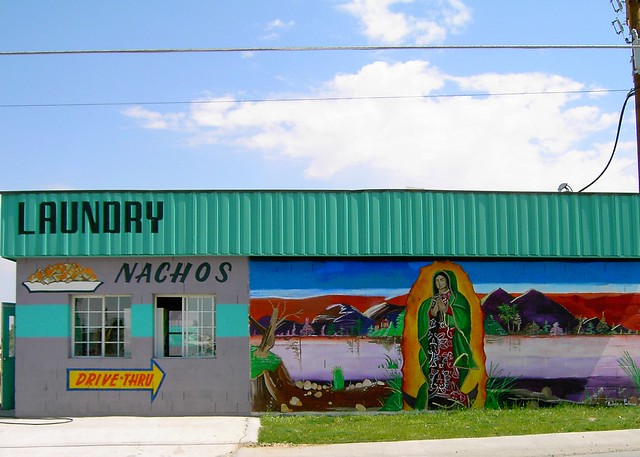
Canutillo:: Laundry with Nachos and Guadalupe on the Side


For a while now, I've been experimenting (OK, using to a greater extent) the Tumblr web ap. My first site is here, with a new one here. The later is solely devoted to all things Guadalupe because it seems El Paso contains a large collection of urban art, etc., about whom Wikipedia explains is the Queen of Mexico, Empress of the Americas and Patroness of the Americas.

What I enjoy about posting to this new Tumblr is how I can publish new images about Guadalupe (and other topics) in a more timely manner than I've previously be able to do with Blogger. However, I don't see me abandoning this site anytime soon; this site should be about general El Paso images and the occasional (!) picture of our cats. But back to the Guadalupe.

I've located many instances of beautiful urban art that transcend the original meaning of rascuache--the common, the wretched, the poor--in El Chuco and elsewhere. This is all quite intriguing as she embodies so much about mestizo identity and the affect colonization has had on out indigenous psyches. Above all else, people seem to have an inordinate need to capture her, which in turn, makes others happy--all this wellspring of creativity brings out the best and most artistic in those who try to create her image.

While I have not forgotten this blog (as seen by the many spontaneous posted images from my camera phone), a lot of my online writing and research is now divided between three blog sites and my twitter account. And if that isn't the way to push out web content I don't know what is. Cheers!

Sunday, August 01, 2010

urban art: cesar chavez/campbell

One of the fun things about going out to shoot pictures with mj is that while he drives, i try my hand at drive-by shooting. I cheated somewhat with this one though because we were stopped at the light.
This mural is quite old and if memory serves, was vandalized at one time. Behind the palm tree is a portrait of the artist, Manny Acosta. Acosta passed away in 1989. Here is a bit of what Askart.com provides about Acosta:
Born in Chihuahua, Mexico, Manuel Acosta settled in El Paso, Texas where he became a painter, muralist, sculptor and illustrator. He studied at the University of Texas at El Paso and at Chouinard Art Institute in Los Angeles.

Saturday, December 19, 2009

Discipline and Punish and the US Parking Slotted Pay Box

Texas plated cars with expired state inspection stickers receive a ticket, while the owners receive a court date. If for some reason there is need to reschedule, due to unforeseen events, a form (from an attorney) will abate the court appearance. Either fax or take the form to the Municipal Courts building on Overland Street, and pay the clerk 10¢ for a copy (she’ll give you a receipt for the money.) Parking availability in front of the building is nil due to all the reserved spaces for police vehicles and consulate cars (the Mexican Consulate is around the corner on the not so ironically named San Antonio Street.) Therefore, if a member of the public has business to conduct within the courts building, they must park their car at the US Parking lot across the street.

In Discipline and Punish, Michel Foucault explains how certain spaces work together to form areas which discipline, punish, and control public behaviors. These change and shift over time and by location. While a community designs their towns in certain ways over time, such collections of formations will create such barriers and constraints, which the public never sees or feels. The layers of buildings, torn down, others built in the same place, lanes widened, streets change to one-way, all result in outcomes never originally planned. In a painless but effective formation, such changes will punish and discipline. Whether these are designs and buildings situated to perform those particular outcomes, as with prisons and schools, there are also more subversive and invisible spaces that discipline those of us who willingly walk into a space and follow the implied or written instructions meted to us. I found one such space this week and was shocked when Foucault’s theory met with the place where I stood—in a parking lot across from the Municipal Courts building on Overland Street.

Most of the US Parking facilities are simple blacktop lots with diagonal lines and numbers to denote a space, along with a simple metal box at one entrance that accepts your coins and bills. In the case of this location, US Parking charges $4 to rent such spaces (0-12 hours). On a slow day, as this was, this means I paid for about 15 minutes of space rental time. What makes parking there so byzantine and punishing is not merely the amount you must pay, but how you pay. To pay for a space, put money into the corresponding slot cut into that red metal box attached to a signage pole. On the day I went, a pink piece of paper taped to the sign above the box politely asked people to pay in “cash, no checks please.” It is not so much the price of the parking lot space because this is America and the need and lack of choice drive space rental.

Yes, it is four dollars because hey, they want to see if you will pay with a $5 bill because you are in a rush or do not have change. It is also because the box with its slots work together with this location in a manner where you will pay; that is punish and discipline. The box disciplines by making you cram the money into that box, which you would not have had to do if you had had your car inspected on time. The slot punishes because you must stand and roll your bills so tight that you think about your grandfather rolling his own cigarettes with Bugler Tobacco. It punishes by making you remember that you miss him even though he died in 1975. Before you finish, you must make sure the money drops inside, so you cram the money into the box with a metal shive attached to the box with a chain. Overall, geography can and will discipline and punish, through this place, those spaces, and the box—across from the courts, as no parking is available on the street. Your money, the metal shive, the street, the courts, and the red box—that is discipline and punish.

Friday, December 04, 2009

Snows: Cotton candy sunset

One of the things I love (and have to be ready for) is sundown after snowfall. From my home, the mountains face southwest and usually after it has snowed, the following evenings sundown will be as pink and rose colored as could ever be imagined. It is as if a carnival came to town and wrapped the mountains in a pink soft blanket confection. It does not look real. But you must be ready to grab your camera and run to the closest available vantage point. I was slow this time, but did capture a few shots from my backyard.

Tuesday, December 01, 2009

Snow day


Snow day
Originally uploaded by chacal la chaise.

Snow came and claimed its spot on the radar of all in town and beyond. The schools had to give it its due, even if this is the last week of regular classes. Schools, including UTEP, opened at 10:00 AM. At 10, the mountains were completely shrouded in a misty fog and rain mixed with snow continued until 1:00 or so.

Taking a break around 3:00, I drove up to the foothills to snag a few shots before running back home to work on a paper due tomorrow. (Like I should be writing this now, right?) No matter, I love the mountains and the time away from the screen was good for the soul and eyes.

2024 Valentine Watercolor Postcard Sampler

This year, I painted and mailed over 50 valentines, and was in advance of an April lumbar spine surgery. That was something different that I...